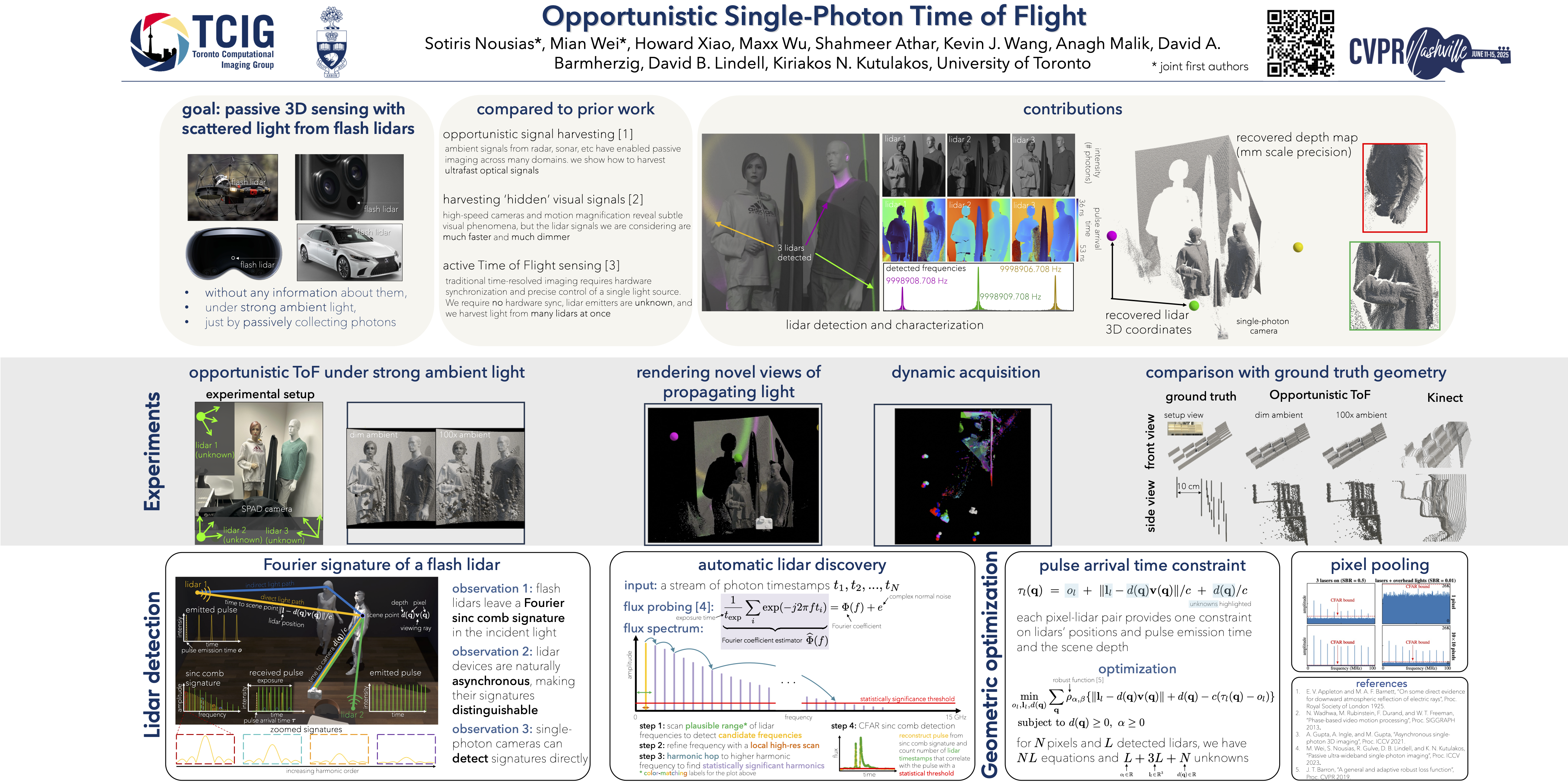
An approach that uses single-photon cameras to harvest ambient light in our environment, such as those from asynchronous pulsed lidar systems, for passive 3D vision.
Ph.D. Student, Stanford University
I'm a first-year PhD student at Stanford Computational Imaging Lab, advised by Prof. Gordon Wetzstein. I am working on efficient computational imaging and generative computer vision.
Previously, I was an undergraduate researcher in Toronto Computational Imaging Group (TCIG), working with Prof. Kyros Kutulakos and Prof. David Lindell. I worked in passive single-photon 3D imaging.
My research interests include computer vision, computational imaging, generative AI, and robotics.
Scroll to view more
Broadly speaking, my current research interests lie in the intersection of computer vision, generative AI, and robotics. I am working on efficient computational imaging and generative computer vision.
During my past research at the University of Toronto, I worked with single-photon avalanche diodes (SPADs) — sensors capable of timestamping photon arrivals with extreme precision and no read noise. This sensor unlocks exciting capabilities for both passive and active imaging tasks, with applications in biomedical science, neuroscience, astronomy, and chemistry.
In my mathematics research, I worked on developing mathematical structures for smooth groupoids and connecting these novel structures to dynamical systems in mathematical physics.
An approach that uses single-photon cameras to harvest ambient light in our environment, such as those from asynchronous pulsed lidar systems, for passive 3D vision.
A code pipeline that takes an increasing stream of photon timestamps captured by an unsynchronized single-photon avalanche diode (SPAD) and completes ultra-wideband probing, frequency thresholding, and 1-dimensional flux reconstruction for multiple asynchronous periodic sources (unsynchronized picosecond lasers, projectors, etc.).
Scroll to view more
A human-centric framework for efficient image and video generation while preserving perceptual quality.
Scroll to view more
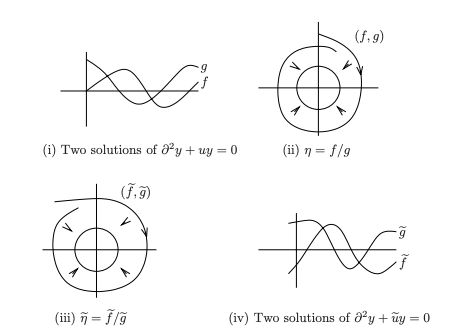
Understanding the structure of central extensions of the Virasoro groupoid and algebroid, classify their cocycles and co-adjoint actions, and study the corresponding equations in mathematical physics.
I completed a four-month independent reading course with Prof. Eckhard Meinrenken at the University of Toronto. I studied the actions of Lie groups and Lie algebras, compact Lie groups, maximal tori, and the classification of finite-dimensional compact Lie groups using root systems.
Scroll to view more
TA: In both winter semesters of 2024 and 2025, I have TA-ed for MAT247H1: Algebra II course at the University of Toronto (taught by Prof. Eckhard Meinrenken). I also TA-ed MAT240H1: Algebra I, taught by Prof. Mathilde Gerbelli-Gauthier in Fall 2024.
Talk: I have given a talk at the Canadian Undergraduate Mathematics Conference (CUMC) 2023 on gaining intuition behind analysis using everyday language analogies. The video link is here. See also my notes on this topic.
Other Notes: Please see here for another set of notes titled "Abstract Algebra Toolbox". This set of notes follows Abstract Algebra by Dummit and Foote.
My childhood: I've spent over ten years of my childhood in Tianjin, China. I love the culture, the food, and above all, the tea there.
My youth: I am proudly Canadian, and from Oakville, Ontario. Now I spend more time in California.
Studies: I graduated from the University of Toronto in June 2025. I specialized in Computer Science and Mathematics. I joined Stanford University as a Ph.D. student in Electrical Engineering in September 2025.
Work: I have completed a full-year internship at Bell Canada, during which I developed internal AI-based software tools using langchain and Ollama.